Sofa Frame Types: Which One Is Best for Your Market?
A weak sofa frame can lead to customer complaints, costly returns, and unnecessary logistics expenses.
The best sofa frame depends on the target market, price positioning, transportation requirements, and customer expectations. The sofa frame is the “skeleton” of the sofa. It determines durability, load-bearing capacity, lifespan, and transportation performance. For furniture retailers and wholesalers, understanding the characteristics of different frame types is the first step in building a differentiated competitive advantage.

Why Does Sofa Frame Selection Matter?
A sofa may look attractive in a showroom or product listing. Problems often appear later when the frame cannot support long-term use, transportation, or assembly requirements.
Sofa frame selection affects durability, transportation costs, assembly experience, and product lifespan. These factors directly influence customer satisfaction and long-term business performance. For importers, wholesalers, and retailers, sofa frame selection is not only a manufacturing decision. It is also a purchasing decision that affects costs, customer experience, and long-term profitability.

Durability and Return Rates
Frame failure remains one of the most serious furniture defects. A damaged fabric cover can often be repaired. A broken frame usually requires replacement or costly after-sales service. This is why frame quality directly affects return rates.
Shipping Weight and Logistics Costs
Frame materials influence product weight. Heavier sofas increase ocean freight costs, warehouse handling expenses, and last-mile delivery charges. Weight also affects how many units fit into a shipping container.
Assembly and User Experience
Many modern furniture products require some level of assembly. Hardware quality and frame precision affect how easy the assembly process becomes. Poorly designed frame connections can create customer frustration and negative reviews.
Product Lifespan
The frame serves as the structural foundation of the sofa. Even when high-quality foam and fabric are used, the product lifespan may be limited if the frame cannot maintain its strength over time.
Different frame types respond differently to repeated use, heavy loads, and daily wear. Understanding these differences helps buyers select products that better match customer expectations and target markets.
Four Main Sofa Frame Types
Most sofas use one of four common frame structures: solid wood, plywood, metal, or frameless construction. Each frame type offers a different balance between strength, cost, and logistics efficiency.

Solid Wood Frames
Solid wood frames use hardwood or softwood components to create the main structural support of the sofa. Common materials include oak, ash, beech, and rubberwood.
Advantages:
- High durability — Solid wood can maintain structural strength for many years.
- Strong load-bearing capacity — The rigid structure handles daily use well.
- Premium quality perception — Many consumers associate solid wood with higher furniture quality.
Limitations:
- Higher material cost — Hardwood is usually more expensive than engineered wood.
- Heavier weight — Transportation and handling costs are often higher.
- Lower packaging efficiency — Rigid structures are difficult to compress or reduce in size.
Plywood Frames
Plywood frames are made from multiple layers of wood veneer bonded together under pressure. They are widely used in modern sofa manufacturing because they balance strength and cost.
Advantages:
- Good cost-to-performance ratio — Plywood offers reliable strength at a lower cost than solid wood.
- Moderate weight — Transportation is generally easier than with solid wood frames.
- Consistent material quality — Manufacturing variation is often lower than with natural wood.
Limitations:
- Quality varies by grade — Performance depends on veneer quality and construction standards.
- Lower premium perception — Some buyers view plywood as a mid-range material.
- Moisture sensitivity — Poor-quality plywood may weaken if exposed to excessive moisture.
Metal Frames
Metal frames are commonly used in sofa beds, recliners, and multifunctional furniture. Steel is the most common material because it provides strong structural support.
Advantages:
- High structural strength — Metal can support heavy loads without significant deformation.
- Good dimensional stability — It is less affected by environmental changes than wood-based materials.
- Suitable for moving mechanisms — Folding and reclining systems often require metal support.
Limitations:
- Higher weight — Metal frames can increase transportation costs.
- More complex manufacturing — Welding and finishing quality directly affect performance.
- Potential corrosion risk — Poor surface treatment may lead to rust over time.
Frameless Designs
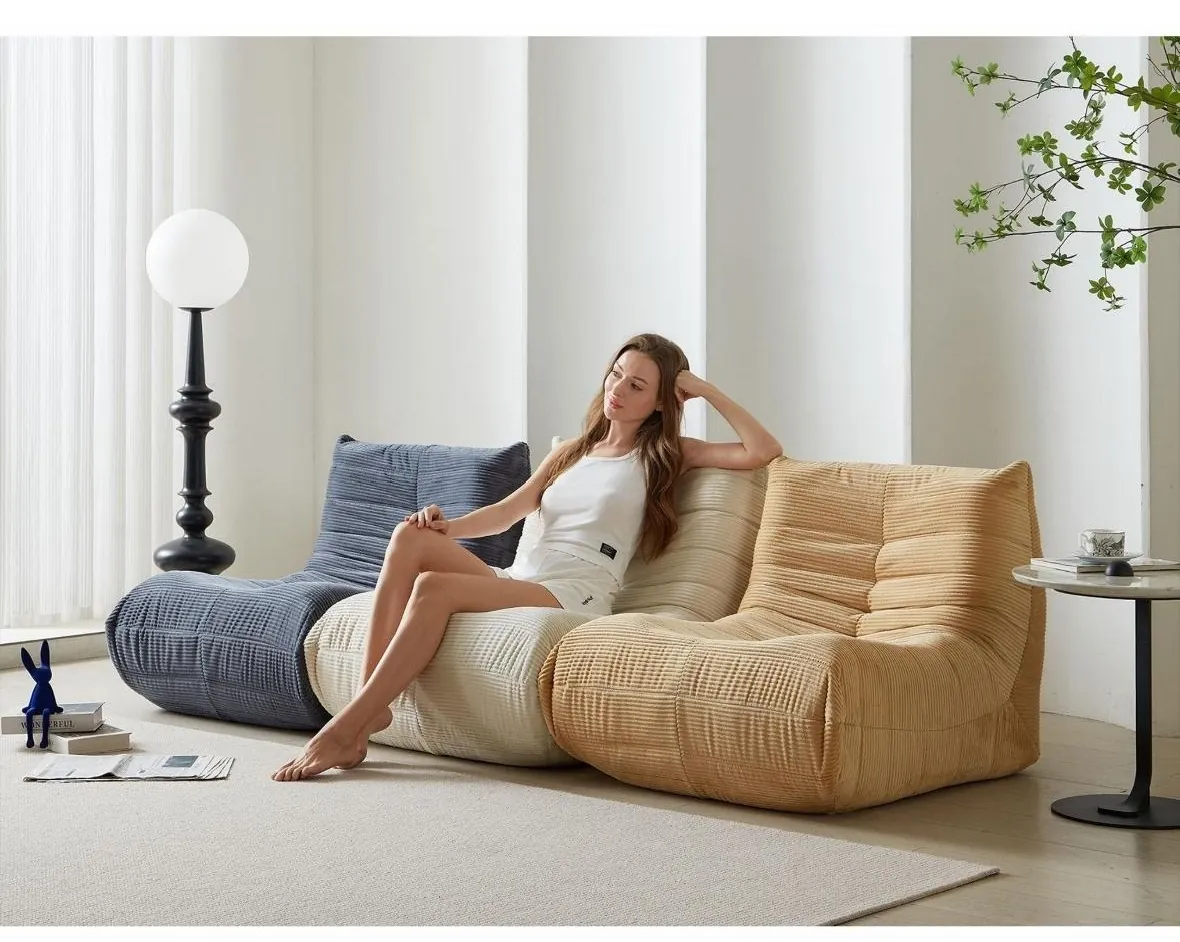
Frameless sofas rely on foam structure rather than a rigid internal wood or metal frame. This design has become increasingly common in compressed sofas and modern lounge furniture.
Advantages:
- Lightweight construction — The absence of rigid frame materials reduces overall weight.
- Compression-friendly design — Many frameless sofas can be vacuum compressed for shipping.
- Improved logistics efficiency — Smaller package sizes can reduce transportation and storage costs.
Limitations:
- Foam quality is critical — Long-term performance depends heavily on foam specifications.
- Different seating experience — Support characteristics differ from traditional framed sofas.
- Quality differences are harder to identify visually — Similar-looking products may perform very differently.
How to Choose the Best Frame for Your Target Market?
Many sofa frames can perform well when used in the right market. The key is matching the frame type to the sales channel, price range, and customer expectations.
No single frame type is suitable for every market. Importers and wholesalers often achieve better results when frame selection matches their business model and target customers.

E-Commerce / Dropshipping
Recommended Frame Types: Frameless Designs and Lightweight Plywood Structures
E-commerce sellers and dropshipping businesses often prioritize shipping efficiency, storage costs, and delivery convenience. Frameless designs work particularly well because they can be compressed into smaller packages, helping reduce transportation and warehousing expenses. Lightweight plywood structures are another practical option because they provide additional structural support while keeping overall product weight relatively low.
Affordable / Discount Retail
Recommended Frame Types: Plywood Frames
Affordable furniture markets typically focus on balancing cost and durability. Plywood frames are widely used because they provide reliable structural performance at a lower cost than solid wood. This allows retailers to maintain competitive pricing while still offering products that meet everyday residential use requirements.
High-End Boutique Stores
Recommended Frame Types: Solid Wood Frames
High-end furniture retailers often emphasize craftsmanship, material quality, and long-term durability. Solid wood frames support this positioning because they are commonly associated with premium furniture construction. While material and transportation costs are higher, these products can help reinforce a stronger premium image and justify higher retail prices.
Hotels / Commercial Projects
Recommended Frame Types: Solid Wood Frames and Metal Frames
Commercial furniture is often exposed to heavier and more frequent use than residential furniture. Solid wood frames provide long-term durability, while metal frames offer excellent structural stability and load-bearing performance. The choice often depends on the project’s design requirements, budget, and expected usage intensity.
Conclusion
The sofa frame is only one part of the product, but it has a major impact on durability, transportation efficiency, and long-term performance. Solid wood, plywood, metal, and frameless designs each offer different advantages and limitations. By understanding these differences, importers, wholesalers, and furniture retailers can select frame structures that better match their market requirements, customer expectations, and business goals.
Planning a Retail, Distribution, or OEM / ODM Sofa Program?
F-concept Inc. supports B2B sourcing for furniture retailers, distributors, importers, projects, and growing brands. Confirm the selected model, carton plan, sample scope, and order requirements before production.
Related B2B Guides
Related OEM / ODM Products
Need Custom Sofa Manufacturing or Wholesale Orders?
Whether you need OEM/ODM manufacturing, white-label packaging, or bulk wholesale from the standard catalog, F-concept Inc. is the source factory you can trust.
For the fastest quote, please provide:
- Target Market / Platform (e.g. Amazon, Wayfair)
- Estimated Quantity (standard bulk MOQ starts at 10 sets per model/color)
- Fabric & Material Requirements
- Target Price Point