Best Fabrics for compressed sofas: Requirements and Material Guide
compressed sofas require fabrics that balance durability, flexibility, and aesthetics—without compromising on performance after compression.
This guide breaks down core material requirements, suitable fabric types, materials to avoid, and smart buying tips for manufacturers and wholesalers.

Let’s explore what makes a fabric ideal for sofa in a box production, from stretch recovery to eco-certifications.
Core Requirements for sofa in a box Fabrics
To function effectively, sofa in a box fabrics must endure compression, unfolding, and frequent use.
Key performance indicators include stretch, strength, wrinkle recovery, and cleanability.

- Elasticity and recovery:
Fabrics should rebound smoothly after folding. Blending spandex or Lycra ensures the sofa returns to shape without sagging. - Abrasion and tensile strength:
Compression involves friction and pulling. High-count polyester, nylon, or blends resist pilling and tearing. - Wrinkle resistance:
Anti-crease finishes or knit structures help the sofa surface stay smooth post-compression. - Lightweight and flexible:
Thin, stretchy fabrics reduce package size and enable better folding, ideal for logistics and storage. - Easy to clean:
Waterproof coatings, stain repellents, or machine-washable materials reduce long-term maintenance costs. - Breathability and comfort (optional):
For daily-use sofas, breathable cotton blends or structured knits enhance comfort. Less needed for short-term setups. - Eco-safety standards:
For indoor use, fabrics should be VOC-safe and hypoallergenic. Flame-retardant options are critical for fire safety compliance.
What Fabrics Are Suitable for Making compressed sofas?
Different fabrics serve different usage scenarios—home, travel, or commercial.
Each material below has been selected for durability, performance, and suitability for compression.

| Fabric Type | Characteristics | Best For |
|---|---|---|
| Elastic blended fabrics | Poly/nylon + 5–20% spandex; strong and shape-retentive | High-frequency folding sofas |
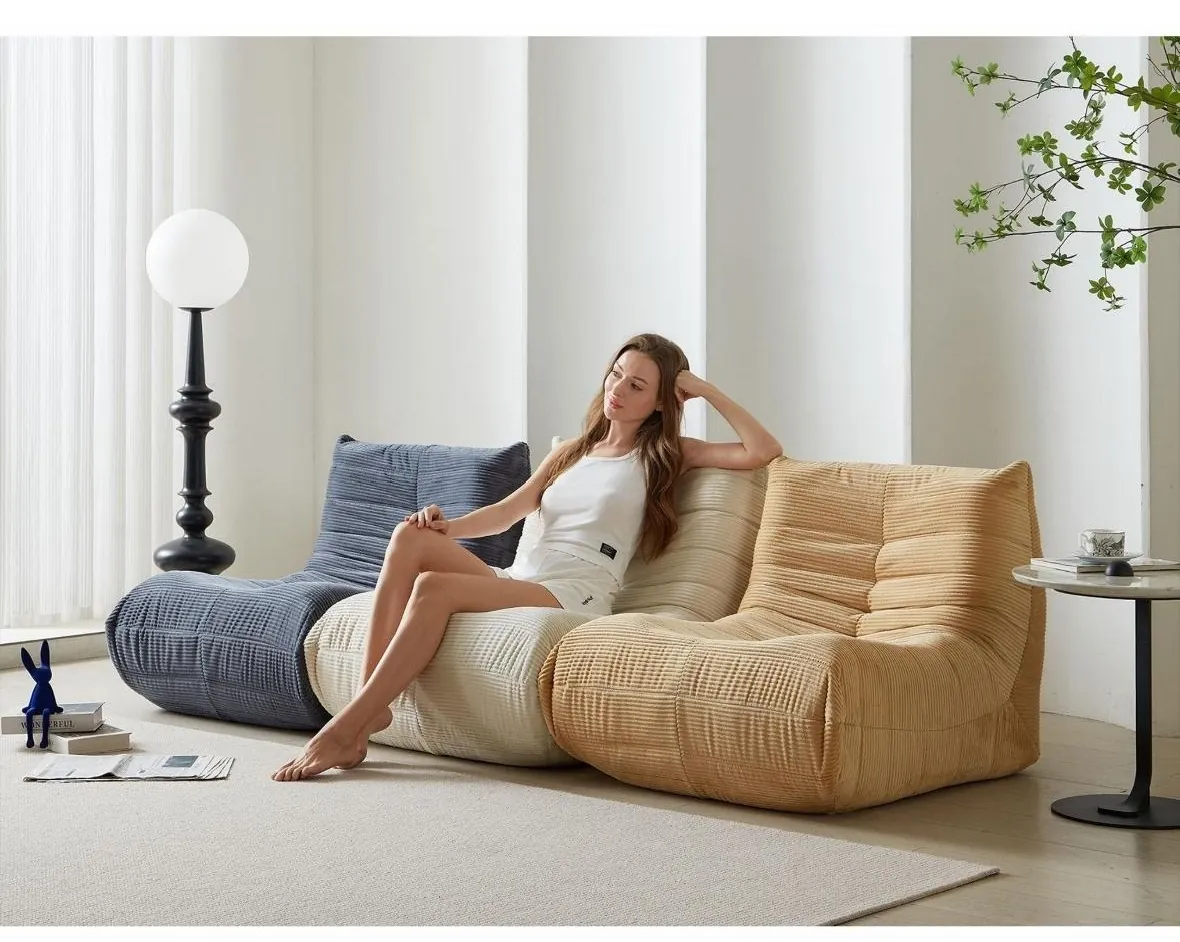
| Knitted fabrics | Stretchable coil-based textures (e.g., terry, velvet) | Lazy sofas, foldable cushions |
| Stretch velvet / suede | Soft nap surface, elastic backing | Aesthetic indoor sofas |
| Synthetic fiber fabrics | High-density polyester or nylon (e.g., Oxford cloth) | Outdoor or portable use |
| Elastic PU leather | Flexible artificial leather, waterproof, scratch-resistant | Children’s rooms, easy-clean areas |
| Functional fabrics | Memory fibers, waterproof TPU coatings | High-end or multi-function flat pack sofas |
Fabrics Not Recommended
Avoid materials that wrinkle, deform, or tear during compression.
These fabrics don’t support folding durability or repeated storage cycles.

- Pure cotton / linen:
Easily wrinkled, lacks elasticity, and may lose shape over time. - Non-elastic synthetics:
Plain polyester with no stretch tends to crease permanently and wears at fold points. - Heavy woolen fabrics:
Bulky and inflexible, reducing packaging efficiency and air permeability.
Purchase / Production Advice
Choosing fabric isn’t only about texture—it’s about matching function with market needs.
Here are practical tips to select the right fabric for your production line.

| Scenario | Suggested Fabric Type |
|---|---|
| Daily use at home | Elastic blends, soft knits |
| Outdoor or commercial use | PU leather, waterproof polyester |
| Budget or low-use settings | Polyester flannel, basic knits |
- Check elasticity:
Stretch and release the fabric—observe its ability to bounce back without wrinkles. - Simulate compression:
Fold and press the fabric for several hours. Does it return to shape without creases? - Check finishing treatments:
Anti-wrinkle, anti-fouling, or fire-retardant treatments enhance performance and safety—especially for indoor sofas.
Conclusion
The fabric defines how well a sofa in a box performs, both in storage and in use. Choose elastic, durable, and cleanable materials to ensure a great customer experience. Whether for portable designs or everyday seating, a smart fabric choice leads to a longer-lasting and more marketable product.
Planning a Retail, Distribution, or OEM / ODM Sofa Program?
F-concept Inc. supports B2B sourcing for furniture retailers, distributors, importers, projects, and growing brands. Confirm the selected model, carton plan, sample scope, and order requirements before production.
Related B2B Guides
Related OEM / ODM Products
Need Custom Sofa Manufacturing or Wholesale Orders?
Whether you need OEM/ODM manufacturing, white-label packaging, or bulk wholesale from the standard catalog, F-concept Inc. is the source factory you can trust.
For the fastest quote, please provide:
- Target Market / Platform (e.g. Amazon, Wayfair)
- Estimated Quantity (standard bulk MOQ starts at 10 sets per model/color)
- Fabric & Material Requirements
- Target Price Point